TV Advertising: From Concept to Broadcast
TV advert production is the end-to-end process of creating a television commercial for broadcast. It typically involves briefing, strategy, creative development, scripting, pre-production, filming or animation, post-production, regulatory approval through Clearcast and final delivery to broadcasters. In the UK, depending on complexity, production usually takes between eight and twelve weeks.
Updated Sept 2026
What are the key steps in producing an effective TV advert?
A TV advert must get noticed, explain the brand or offer, fit the budget, pass clearance, meet technical delivery requirements such as format, audio levels, video specifications and file type, and be ready when the media plan requires. Missing any of these can destabilise the process.
This is why TV advert production demands proper planning. You’re not just making a video, you’re building a broadcast asset that must withstand creative and production challenges. Get in touch with one of our producers who can help with the process.
The TV advert production process
The order matters. You can move quickly through the process. Hopefully simplify. But you can’t miss the important bits and hope nobody notices. They will.
The first crucial stage: start with the brief.
Good TV advert production begins with the brief. It doesn’t have to be 40 pages only include what matters.
The brief should detail what you are trying to change. Who are you trying to reach? What do they think now, and what do we want them to think after seeing the advert? What is the budget? When does it need to air?
Those questions sound simple, but they are often where the real work happens.
If the brief says "raise awareness", the next question is "awareness of what?" If the brief says "drive sales", the next question is "what exactly should the viewer do?" And if the brief says "make us look premium", the next question is "premium to whom?" TV advertising makes vague thinking expensive.
Define the job TV needs to do
TV is powerful, but it’s not magic. Before production starts, the team needs to know what the advert is for.
It might be there to launch a brand. Or need to support a price promotion. Some brands use TV media to make themselves feel more trustworthy. Each job affects the TV Advertising costs.
A launch advert needs a bold, memorable brand idea. A direct-response advert requires a strong offer and a clear end frame. A regulated advert allows time for claims and legal text. For retail, consider versioning for offers, dates and regions.
The best production decisions come from knowing the commercial job. Not from guessing what will look nice.

What happens during Creative development?
Creative development is where the idea is shaped. This usually includes scripts, visual references, storyboards, mood boards or a treatment.
A TV script should be clear enough to show what happens on screen, what is said, what appears as text and how the brand is presented. This matters because the script is not just a creative document.
It is also a production document. It affects casting, locations, props, music, wardrobe, post-production, legal text, timings and clearance. One line in a script can add thousands of pounds.
"We see the family driving through the mountains" sounds harmless.
Until somebody asks where the mountains are, how the car gets there, who is insured to drive it, what happens if it rains and whether the client has approved the vehicle colour.
Keep the idea simple.
A good TV advert usually has one main idea. Not five. The viewer should know who the advert is for, what is being offered and why it matters. If they have to untangle the message, you have probably lost them.
This does not mean the advert has to be plain.
It can be funny or emotional. It should be artfully shot. It can be odd and quirky. Just don’t make TV wallpaper.
Wallpaper adverts often come from too many stakeholders trying to squeeze in too many messages. The product team wants a feature. Sales wants an offer. The board wants a brand statement.
The job of the production and creative team is to protect the idea while still solving the business problem.
As creative ideas develop, it's vital to consider clearance requirements early on.
In the UK, TV adverts must comply with the relevant advertising rules before they can be broadcast. Clearcast clears adverts for air in the UK, and it supports agencies, advertisers and broadcasters across TV and VOD advertising (Clearcast).
If your advert makes claims, you need evidence to back them up. If it uses price, health, finance, environmental or performance claims, you need to be careful.
At the script stage, Clearcast says advertisers should submit the script, substantiation, and any necessary storyboards, with feedback usually taking around three working days unless technical or scientific claims require a longer review (Clearcast Help Desk).
Clearing at the script stage gives you a chance to fix problems before the shoot. You’re dealing with a human at Clearcast; it can be a discussion as long as you’re sticking to the rules.

Claims and substantiation
Claims are where many TV adverts get into trouble. "Best" is a claim. "Number one" is a claim. "Clinically proven" is a claim. "Saves money" is a claim. "Greener" is a claim. "Fastest" is a claim.
If you say it, you may need proof, called substantiation. This could be sales data, independent testing, customer research, product evidence, pricing data or technical documentation.
What happen during Pre-production?
Pre-production is where the advert becomes real. This is the planning stage between approving the idea and making the thing. It is where the producer earns their money.
A good shoot usually looks calm because the chaos was dealt with before anyone arrived on set. If everyone has signed off on the elements of the advert before filming, it means fewer questions while the camera is running.
What’s involved in casting?
Casting can change the whole feel of an advert. The right performer can make a simple script feel natural. The wrong performer can make a good idea feel false or set the viewer on edge.
The team must also consider usage: where, for how long, in which countries, and on which platforms. Usage shapes contracts and costs.
Locations and set design
Locations do more than provide a background. They tell the viewer what kind of world the brand lives in. Choose carefully, as the location seats your brand very specifically.
Locations also affect cost and logistics. You need access, power, parking, permissions, space for crew, space for clients, toilets, weather cover, and somewhere to eat lunch. Lunch matters more than some people think.
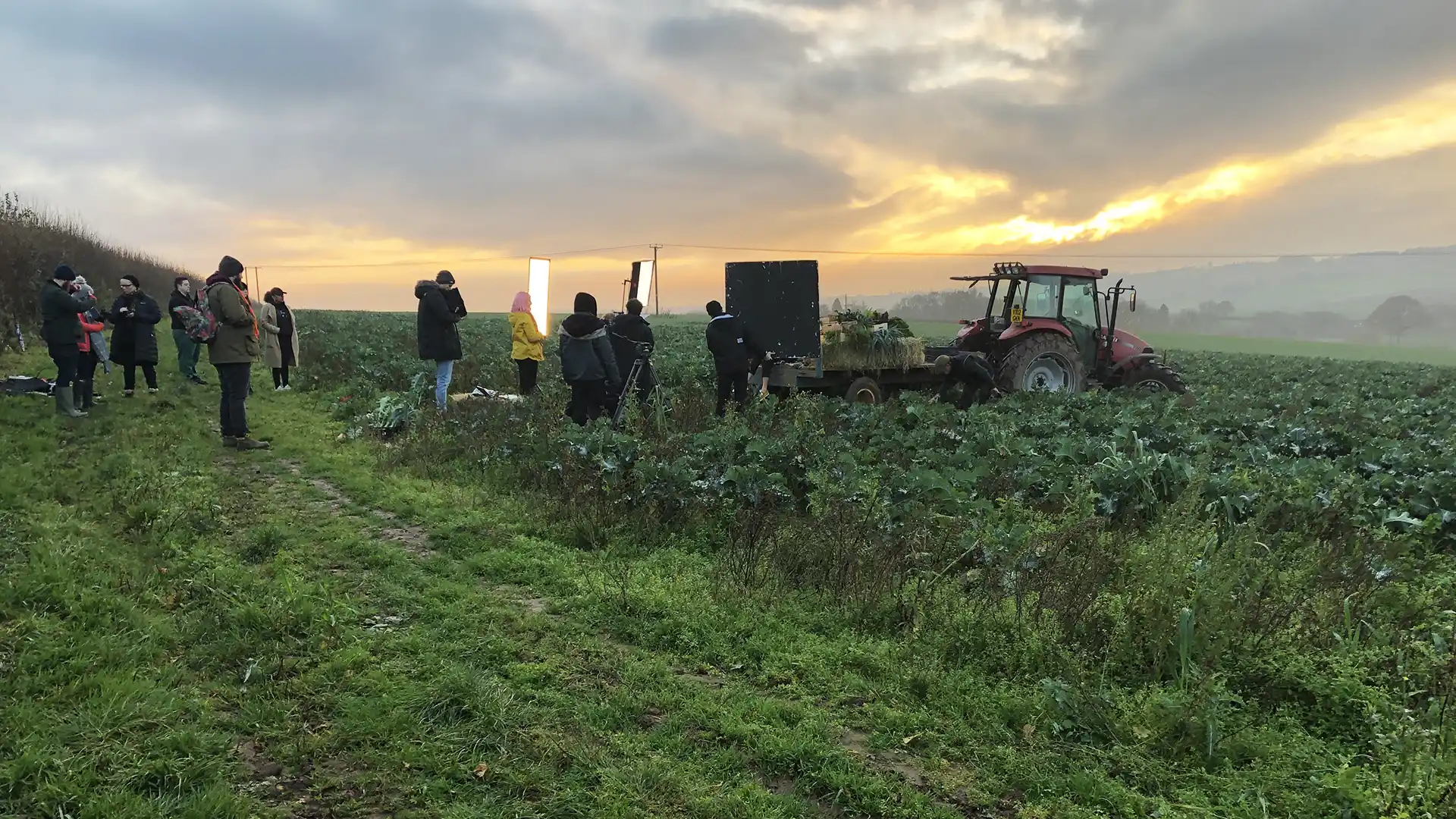
Sustainable production
TV production uses resources. There is travel, power, lighting, catering, sets, props and post-production.
That does not mean every production has to be wasteful. Toast has looked at practical ways to reduce the impact of production, including more careful travel, electronic production documents, recycling props and consumables, reusable water bottles, rechargeable batteries, and more efficient lighting.
Make sustainable choices part of every production. Actively plan to minimise waste and use resources wisely. After your next shoot, review your practices and identify areas for improvement. Start making changes now—every step counts toward more efficient, responsible TV advert production.
How are Adverts filmed?
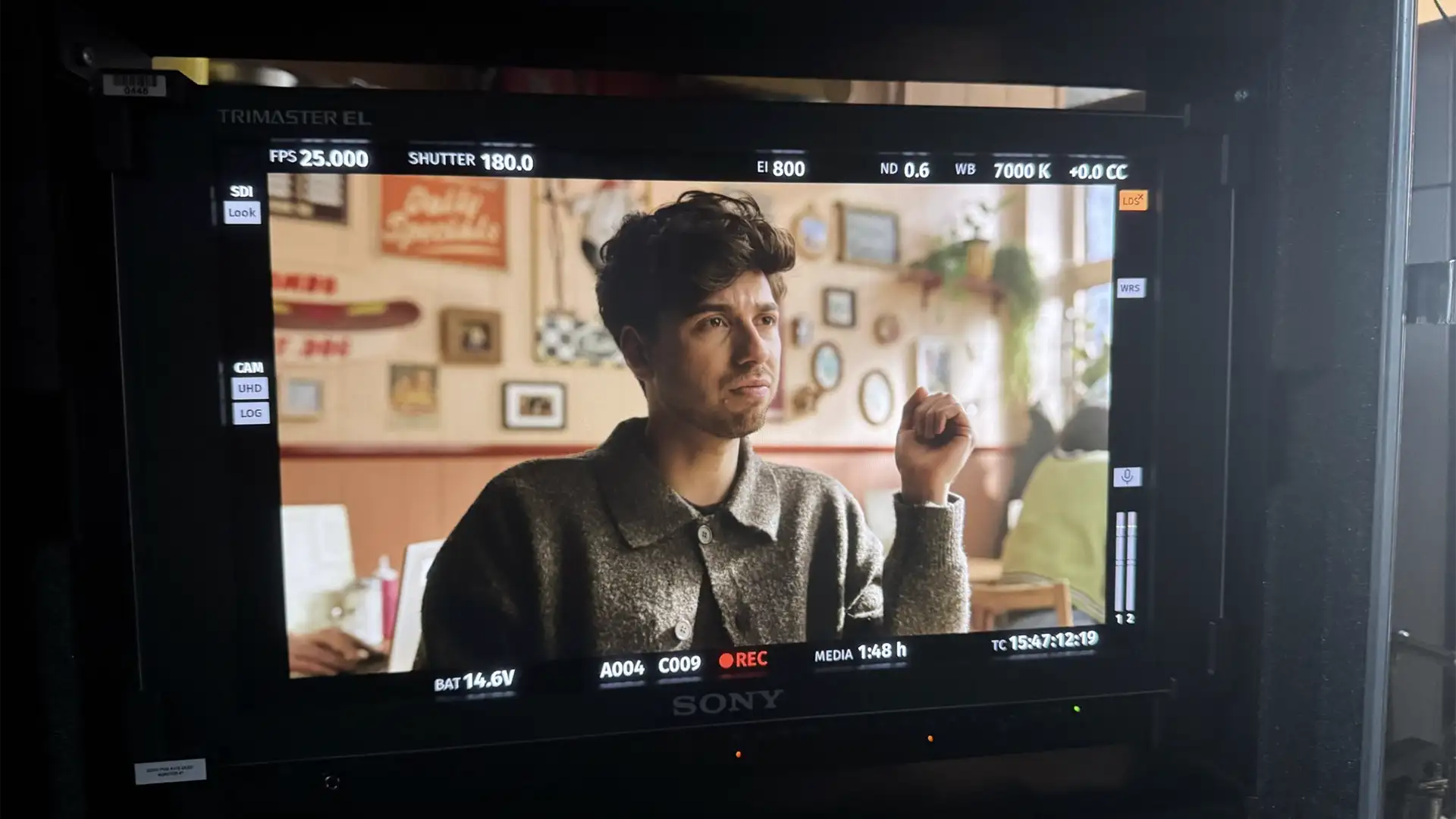
The shoot is the bit most people imagine when they think about TV advert production.
Cameras. Lights. Director. Crew. Client monitor. Someone with a clipboard. Someone is asking where the coffee is. A shoot day is usually built around the schedule.
The team needs to capture the shots required for the approved script while also protecting performance, product details, legal requirements, and edit options. The producer watches the time and budget. The director focuses on the performance and visuals. It is the agency lead's job to watch the idea. The client protects the brand.
Animation and motion graphics
Not every TV advert is live action. Some are animated or use motion graphics.
Animation can be useful when the product is hard to film, the service is abstract, or the budget does not support a live-action shoot. It can also help regulated brands explain complex ideas without showing unrealistic scenarios.
Animation is not automatically cheap. Good animation takes time. It needs scripts, style frames, storyboards, animatics, voiceover, music, design, animation, revisions and finishing. The benefit is control.
Directing for TV
TV adverts are short, and that makes directing them harder, not easier. A 30-second commercial has very little room for waste. Every shot needs to earn its place. Every reaction, line, product shot and end-frame has to work. This is why commercial directors are a specialist breed.
They understand how to create a mood quickly. They know how to make a product look good without making it feel like a catalogue. They can help a performance feel real in a very compressed format. They also need to keep the clients’ trust throughout the process.
What’s included in Post-production?
Post-production is where the advert is built. Editing is where the rhythm is found. A reaction may do more work than expected. The client will generally push for a longer endframe and a larger logo.
What matters is that feedback is clear. "Can it feel more premium?" is not very useful on its own. "The opening feels too slow, and we need the brand in the first five seconds" is much better.
Music, voiceover and sound
Sound plays a big role in TV advertising. Music can create pace, emotion and memory. A voiceover can make a complex message easier to understand.
If you use a commercial music track, you need the right licence. If you commission music, you need to know what is covered. If you use a voiceover artist, usage matters again. Where will the advert run? For how long? In which territories? On which platforms?

Legal text and supers
Legal text is not there to make the advert prettier. It is there because something needs explaining or a claim clarifying. That might be a pricing condition, a financial term. If the legal text is needed, it needs to be readable.
Clearcast says a rough-cut review can include a supers check, in which superimposed legal text is reviewed against legibility standards (Clearcast Help Desk). This is another reason to think about legal lines early.
If the whole advert relies on tiny text at the bottom of the screen, the edit may need more time at the end frame. The design may need to be simpler. The wording may need to be shorter. Legal text is not just a compliance issue. It is a creative and production issue as well.
What is the rough cut for?
This is the moment where people see the advert taking shape. Clearcast says a rough-cut submission is not mandatory but strongly recommended, and their Copy Clearance team reviews the advert for compliance with, and any timing or scheduling restrictions. (Clearcast Help Desk).
This stage can save a lot of trouble. If something is not working, it is better to know before the final grade, sound mix and master delivery. If a claim needs adjusting, fix it now. If legal text is too small, fix it now. If a shot creates a problem, fix it now.
Final TVC approval
The final TVC is the finished television commercial. The final stage involves uploading the final clocked advert, including the clock slate.
Clock numbers and delivery
A broadcast TV advert needs to be identified properly. That is where the clock number and clock slate come in.
The clock slate is shown at the head of the commercial file and helps identify the advert, version and duration. The final TVC upload should include the clock slate ready for Clearcast approval.
After final approval, the ad is ready for delivery to broadcasters through the advertiser or agency's preferred delivery supplier.

What are Versions and cutdowns
TV advert Versions are extra copies of the commercial which feature different information from the main advert. Versions can be needed if different languages are used for the ad or extra endframes are used. Cutdowns are exactly as described, a shorter cut down version of the main TV commercial. Cutdowns are used in and around the main TV advert, they're useful in reminding viewers of the brand and story without the client needing to buy a full-length TV ad slot.
Most campaigns need more than one file. There may be 30-second, 20-second, 10-second and 6-second versions. There may be BVOD versions, social versions, subtitled versions, square versions, vertical versions, regional versions and offer-led DRTV versions. If you know the versions at the start, you can shoot for them. The DOP can frame shots safely and capture extra product angles. The endframe will be built with changes in mind.
How long does it take to produce a TV advert?
We can get an ad on air in 8 weeks if we have to, but it’s a race, and everyone needs to be speedy with feedback. The honest answer is that it depends.
A simple animation or product-led advert can be turned around faster than a live-action shoot, which includes casting, locations, props, legal claims, and multiple versions.
How much does TV advert production cost?
TV advert production costs depend on the idea. We have an entire page devoted to TV advertising costs. A simple studio shoot costs less than a multi-location production with cast, vehicles, weather cover and visual effects.
But cheap is not always a good value. If the advert looks cheap, feels unclear or cannot pass clearance, the saving is not a saving. It is just money spent in the wrong place.
A good production company should give you a clear budget. It should show where the money is going. It should also tell you what is not included.If you like Toast to help with your next TV advert production, do get in touch. We have years of experience making beautiful ads for brands like Loaf Sofa, Trivago, Abel & Cole and Innocent Smoothies.
TV Advertising jargon explained:
If you hang around with TV advertising types long enough you’ll start to hear specific jargon that relates directly to advertising. If you're looking for an explanation of that jargon keep reading.
BCAP Code
The BCAP Code is the UK Code of Broadcast Advertising. It sets out the rules for every advert and sponsorship ident shown on television and radio services licensed by Ofcom (ASA). Clearcast checks scripts, rough cuts and final adverts against this Code before broadcast, not after. The Code covers content and scheduling together, so it dictates where an advert can run as well as what it can say (ASA). An advert for alcohol or gambling will run into scheduling restrictions under this Code long before it hits a content problem. We've found that using Clearcast as a conduit to the BCAP code is incredibly helpful. Getting early advice on whether Clearcast thinks your TV ad script will fall foul of the BCAP Code saves lots of wasted time and money.
PEACH
Peach is a delivery and production management platform used across UK advertising. Agencies use it to get finished adverts to broadcasters, along with the technical checks that come with that process. Toast TV used Peach for years but we've been increasingly using Clearcast’s own delivery platform. We found that using Clearcast to send the ads they'd just cleared cut down on any errors that could creep into the process.
CARIA
CARIA is where airtime bookings and copy rotation instructions get confirmed. Attribution links each advert to the right advertiser, agency and product category for BARB audience data (Clearcast). Clearcast and Peach work closely together, but they are separate businesses. In our opinion Caria is the system that has us tearing our hair out the most. While systems like Clearcast have undergone improvements and development over the years Caria has a whiff of the 1990's about it.
Loudness standards
Loudness standards exist to stop adverts sounding jarringly louder than the programmes around them. UK broadcasters measure loudness using the EBU R128 standard, targeting minus 23 LUFS of integrated loudness across the whole advert (EBU R 128).


