
Travel advertising spend has bounced back since the pandemic. UK travel brands spent £354 million on TV advertising in 2023, up from £274 million in 2018. That’s a clear signal that the travel industry believes in advertising.
However, media spend is only part of the equation. The brands generating the best returns combine smart media planning with creative that earns attention. To illustrate this, we’re exploring what effective travel advertising looks like in practice, using real campaign examples.
Many travel marketers are tempted to focus on digital channels like PPC and paid social, prized for their measurability and speed. However, Thinkbox research proves that the biggest profits come from elsewhere. For instance, linear TV alone delivers 46.6% of full advertising-generated profit, with an average ROI of £5.94 per pound spent when sustained effects are considered.
For travel brands specifically, the numbers are even more pointed. Travel agents that did not include TV in their media mix saw returns fall by 18%, amounting to £9 million in lost revenue. Hotel chains that excluded TV saw a 11% drop, or around £4 million. These figures are haunting a financial director somewhere.
TV also does something that most digital channels cannot. It creates the emotional desire to go somewhere in the first place, and then performance channels convert that intent into bookings. Travel is an inherently emotional category. When looking for a trip, people want to feel the warmth, the freedom, the adventure. Stunning video on a large screen does that better than a remarketing banner. Get in touch if you help with your next travel campaign.
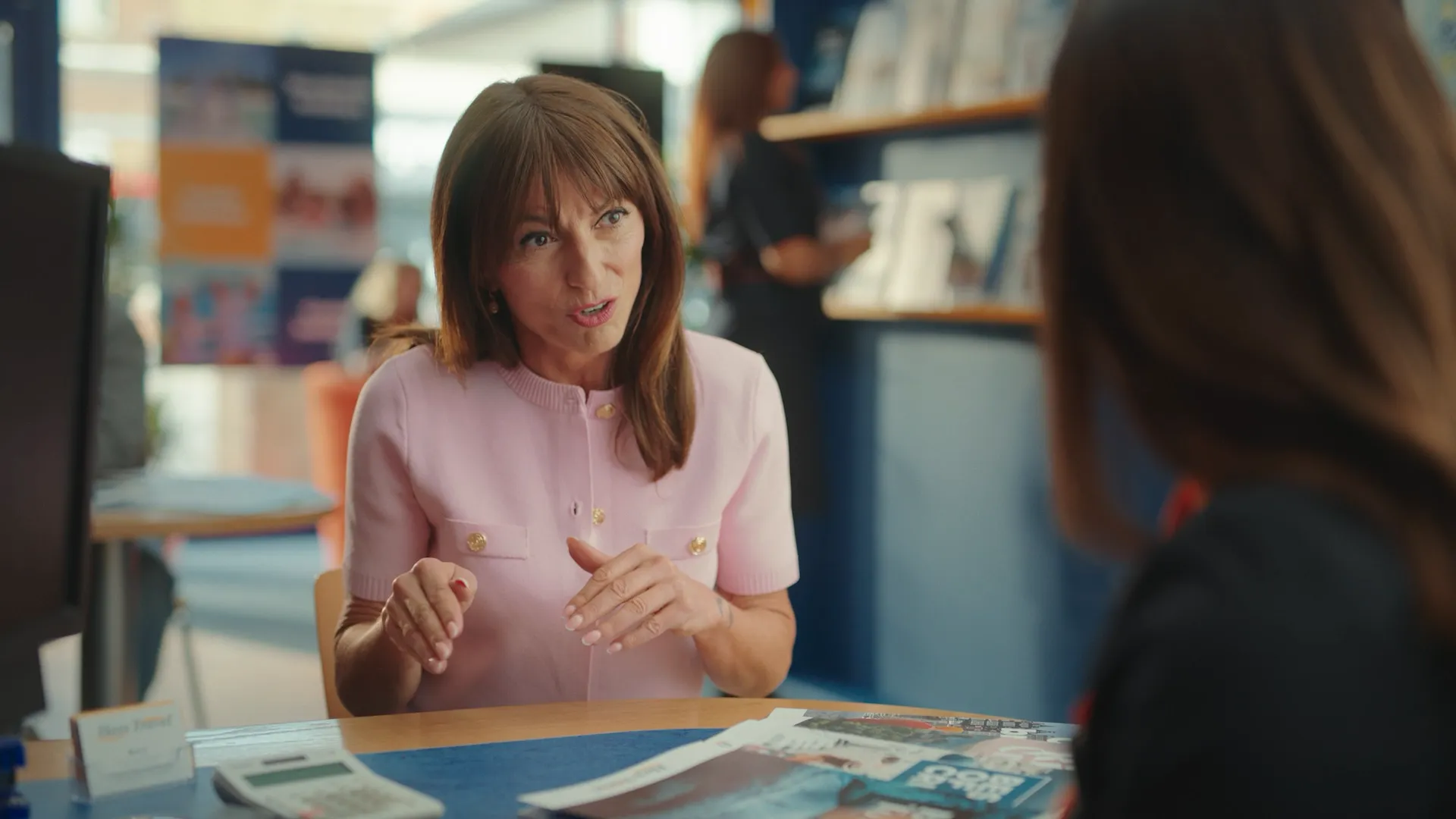
At the turn of 2025, Hays Travel launched what it described as its biggest ever marketing investment. Toast was appointed as the creative agency, producing three TV adverts to showcase the breadth of the Hays Travel offer: a long-haul trip to Peru, a family beach holiday, and a luxury cruise. travelweekly.co
Another campaign featured Davina McCall as the face of the brand, bringing warmth, familiarity and a sense of trustworthy recommendation to a brand whose reputation is built on personal service. Toast worked closely with directing duo the Nott Brothers and Hays Travel’s internal creative and marketing team to make sure the campaign held together across every channel: TV, radio, print and out-of-home.
Hays Travel head of marketing David McNiven put it clearly: “This new creative is part of our long-term strategy to get people talking and build brand equity with a consistent campaign that is impactful, bold, creative, and innovative.” travelweekly.co.uk
That consistency across channels is not just a production detail. It matters commercially. Research shows that TV can boost the performance of other media channels used in a campaign by up to 54%. When your TV creative and your print and social all tell the same story, you compound the effect of every pound spent.
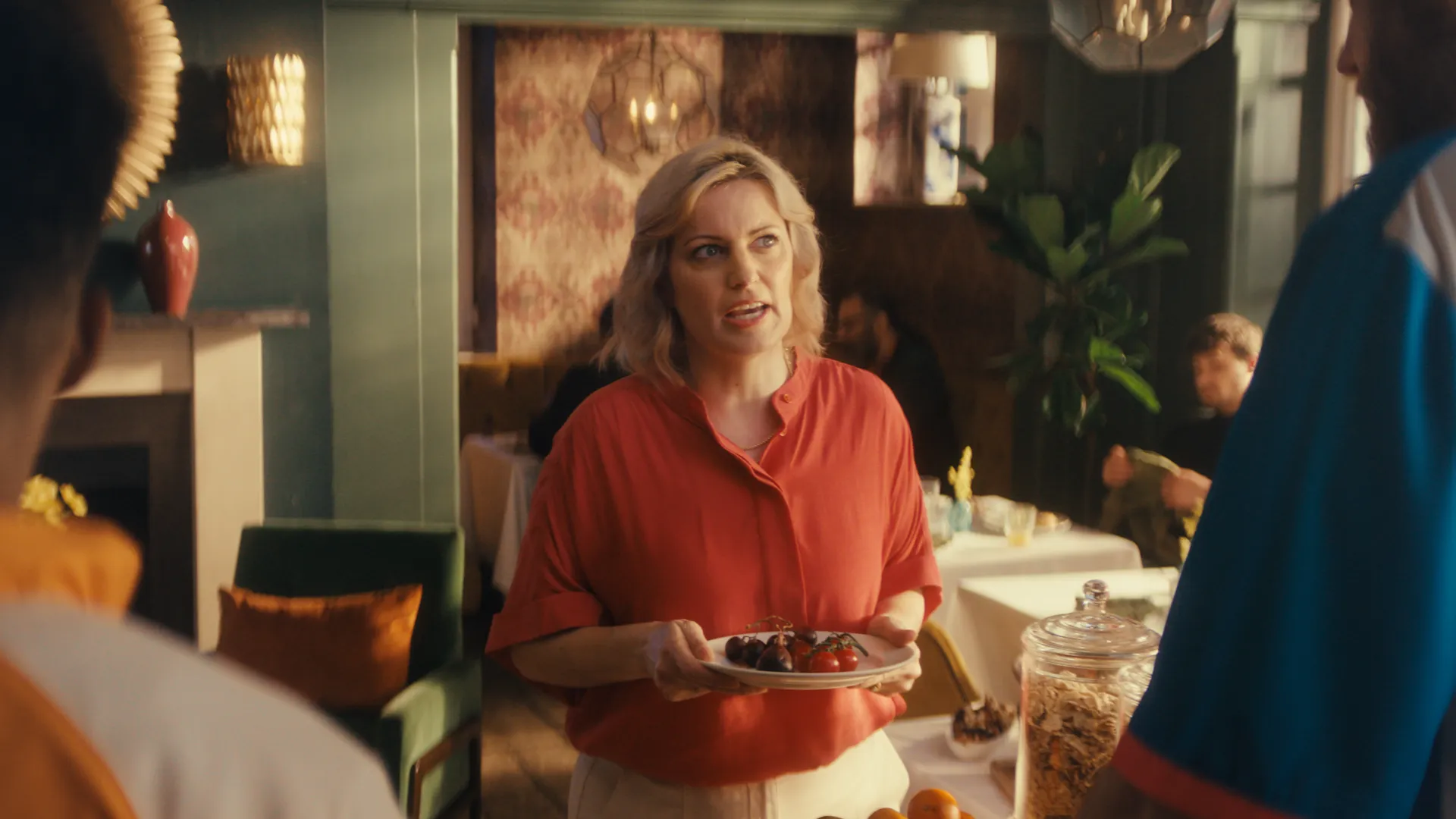
Trivago has been a consistent TV advertiser for years. They sit in a category where consumer trust is a key purchase driver. People need to believe a price comparison site is genuinely surfacing the best deals, not just pushing paid listings.
Toast produced the latest Trivago TV advert, developed to increase confidence and develop trust in the brand while bringing to life their new brand expression and promise: “Search savvy. Feel super.” Given that Trivago already employs AI technology in its adaptation process, the production approach had to be considered from the start.
This is a growing reality for any travel brand advertising at scale. Global travel gross bookings are projected to reach $1.67 trillion in 2025, and online bookings alone are forecast to rise 8% to $1.07 trillion. When you are competing at that level, your creative output needs to travel, sometimes literally. Building adaptability into the production process from day one saves significant time and cost later.
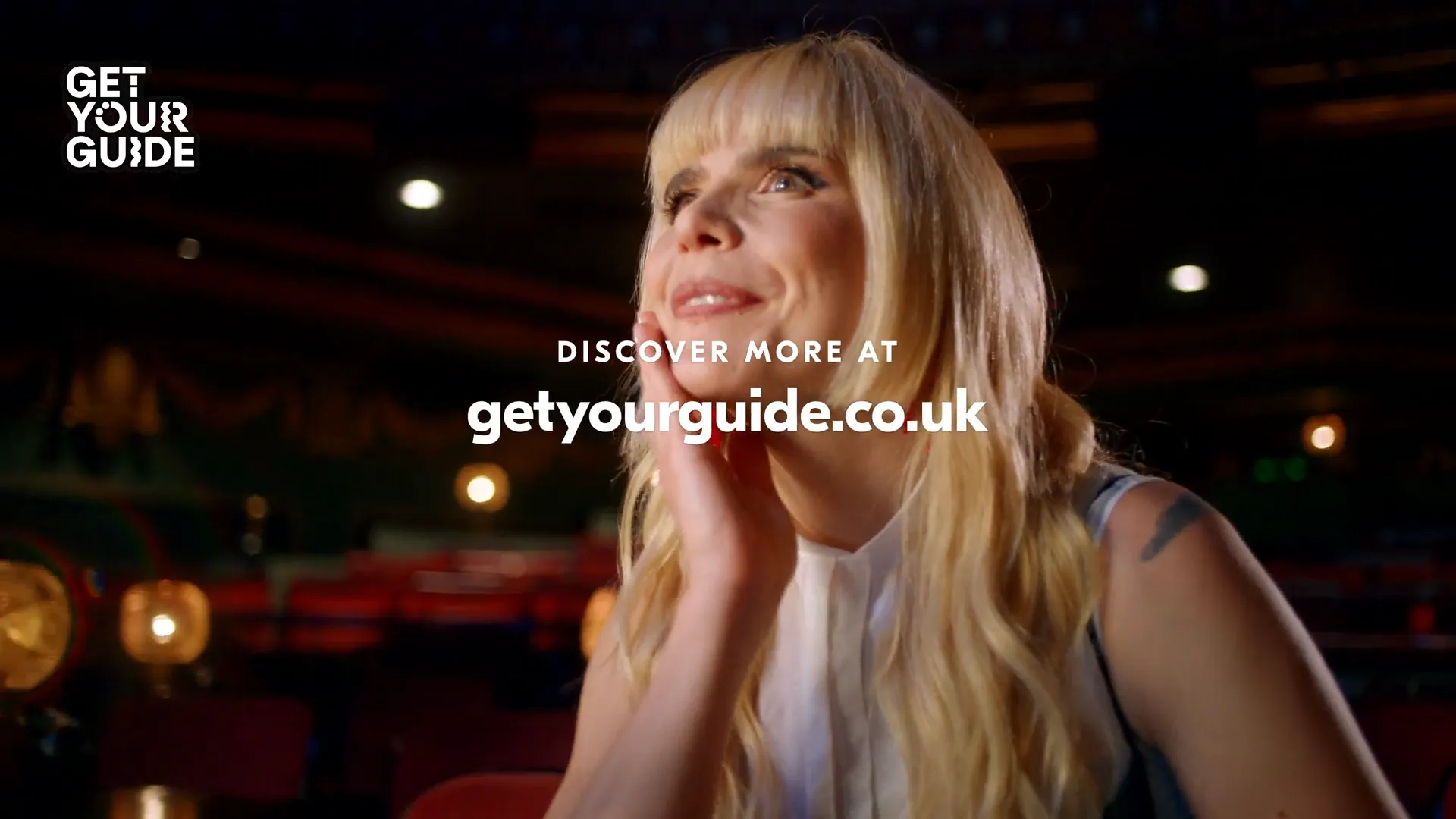
Not all travel advertising needs to look like an advert. Get Your Guide took a different approach with their London campaign, working with Toast to produce a piece of branded content that people might genuinely choose to watch.
Singer-songwriter Paloma Faith took viewers on a tour of the London music spots that shaped her career: Flashback Records in the East End, Wilton’s Music Hall, Denmark Street, and the Kit Kat Club at the Playhouse Theatre.
The film works because it feels true. It’s travel brand advertising that slips under the radar. Paloma knows these places. She has stories about them. The brand’s role is simply to offer others a way to experience their own version of the same day. getyourguide
Around 85% of British travellers say they are looking to be inspired by discovering new experiences when they travel. Paloma Faith is a perfect vehicle for that insight, because she does not represent generic tourism. She represents a specific, personal, music-led way of experiencing a city.
This is travel brand storytelling at its best. It is not selling a product. It is selling a feeling, a version of travel that the viewer wants to step into. The brand becomes the enabler of that experience.
Whether it’s a three-advert TV campaign for a national travel retailer, a trust-building brand film for a hotel comparison site, or a celebrity-led piece of branded content for an experience platform, the travel advertising that works in 2026 shares a handful of qualities.

Travel is a big category with big budgets and fierce competition. The brands that win are the ones that invest in stories worth telling, and then make sure those stories are seen.
If you want to talk to Toast about your next travel campaign, take a look at our work or get in touch.
It is film or video that earns views by being genuinely interesting, rather than by buying space. Get Your Guide's London campaign with Paloma Faith is a good example: instead of a conventional holiday ad, viewers spent time with a musician exploring the city's music history, with the brand positioned as the platform that helps others do the same.
UK travel brands spent £354 million on TV advertising in 2023, up from £274 million in 2018. Travel agents that removed TV from their media mix saw returns fall by 18%, equivalent to £9 million in lost revenue, which makes the case for the channel pretty clearly.
TV consistently delivers the strongest return. Thinkbox research shows linear TV accounts for 46.6% of full advertising-generated profit, with a full profit ROI of £5.94 per pound spent. The most effective travel campaigns pair TV for reach and trust-building with BVOD and social to capture the intent it generates.


